Having an irregular period can be confusing and sometimes frustrating. One month your period may arrive earlier than expected, while the next month it may be several days or even weeks late. You may also notice changes in how long your cycle lasts, how long you bleed, or how heavy your flow is.
An occasional change does not necessarily mean something is wrong. However, if your periods are consistently unpredictable or your usual cycle suddenly changes, it is worth paying attention.
Your menstrual cycle is influenced by a complex interaction between your brain, ovaries, hormones, nutrition, stress levels, lifestyle, and overall health. Sometimes an irregular cycle is temporary, while in other cases it may be a sign that ovulation is not happening regularly or that an underlying condition needs attention.
In this article, we’ll look at 9 common causes of irregular periods, what changes you should watch for, and when it may be time to speak with a healthcare professional.
What Is Considered an Irregular Period?
Your menstrual cycle is counted from the first day of one period to the first day of the next.
For many adults, cycles generally occur every 21 to 35 days. The important thing is not only the exact number of days but also whether your cycle follows a reasonably predictable pattern.
A period may be considered irregular when:
Your cycles repeatedly occur less than 21 days apart.
Your cycles are consistently longer than 35 days.
Your periods frequently arrive at unpredictable times.
You regularly skip periods.
Your usual cycle suddenly becomes very different.
You experience unusual bleeding or spotting between periods.
Some changes are subtle. For example, you may still get a period every month but notice that your cycles are becoming increasingly short or long. Tracking your cycle can help you recognize these patterns.
An irregular period is a symptom, not a diagnosis. It can happen for many different reasons, so the goal is to understand what may be causing the change.
9 Common Causes of Irregular Periods
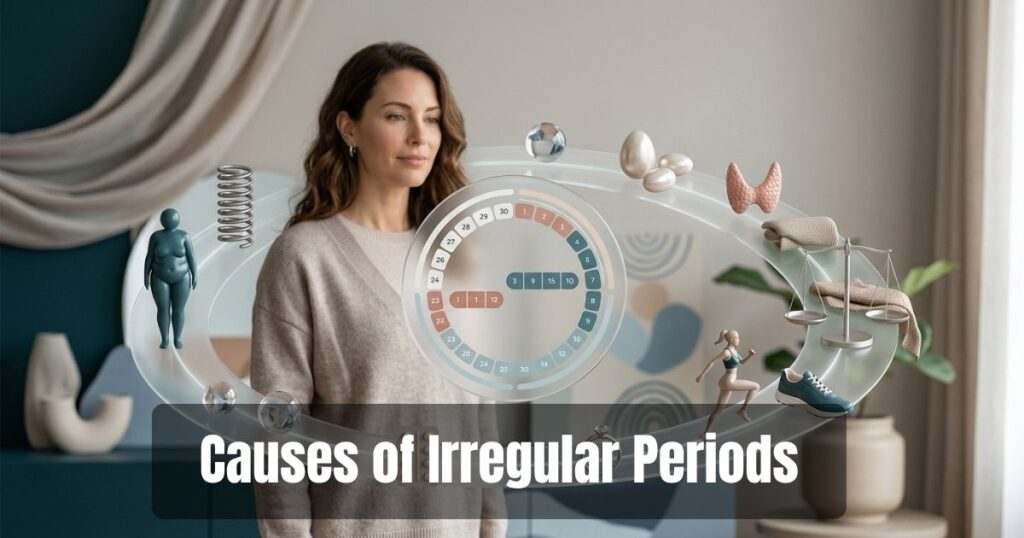
1. Stress and Hypothalamic Dysfunction
Stress is a common reason menstrual cycles can change.
When your body experiences significant physical or emotional stress, the brain can alter the hormonal signals involved in reproduction. This can affect ovulation and may cause your period to arrive late, become irregular, or stop temporarily.
But stress is not limited to emotional pressure.
Your reproductive system can also respond to physical stress, including:
Very restrictive dieting
Not eating enough calories
Rapid weight loss
Excessive exercise
Inadequate recovery
Significant sleep disruption
When the body does not have enough energy to meet its needs, the brain may reduce the signals that stimulate the ovaries. This is sometimes referred to as hypothalamic dysfunction or, when periods stop, hypothalamic amenorrhea.
This is one reason why an irregular period should not automatically be blamed on “hormones” without considering nutrition, exercise, stress, and other aspects of your lifestyle.
2. Polycystic Ovary Syndrome (PCOS)
Polycystic ovary syndrome (PCOS) is a common hormonal condition that can affect ovulation and menstrual cycles.
When ovulation does not occur regularly, periods may become infrequent, unpredictable, or absent.
Other possible signs of PCOS include:
Acne
Increased facial or body hair
Hair thinning on the scalp
Difficulty managing weight
Difficulty becoming pregnant
However, having irregular periods does not automatically mean you have PCOS. Several other conditions can produce similar menstrual changes.
A healthcare professional may consider your menstrual history, symptoms, examination, blood tests, and other findings when evaluating possible PCOS.
3. Thyroid Problems
Your thyroid gland produces hormones that influence many functions throughout your body, including metabolism and reproductive health.
Both underactive thyroid (hypothyroidism) and overactive thyroid (hyperthyroidism) can be associated with menstrual changes.
With hypothyroidism, for example, someone may experience symptoms such as:
Unusual tiredness
Weight changes
Feeling unusually cold
Hair changes
Mood changes
Irregular periods
Thyroid dysfunction can affect the hormonal processes involved in menstruation, which is why thyroid health is often considered when someone has persistent abnormal cycles.
If your menstrual changes occur alongside other possible thyroid symptoms, a healthcare professional can determine whether thyroid testing is appropriate.
4. Significant Weight Changes or Undereating
Major changes in body weight can influence reproductive hormones and ovulation.
Rapid weight loss, very low calorie intake, restrictive diets, or being significantly underweight may interfere with the hormonal signals needed for regular menstruation.
Significant weight gain can also be associated with changes in ovulation and menstrual regularity.
The important point is that adequate nutrition matters for reproductive health. Your body needs sufficient energy and nutrients to support normal hormonal function.
Rather than relying on extreme diets or rapid weight-loss approaches, focus on sustainable eating habits that provide enough energy, protein, healthy fats, vitamins, and minerals.
5. Excessive Exercise
Exercise is an important part of a healthy lifestyle, but more is not always better.
Very intense exercise combined with inadequate nutrition or insufficient recovery can affect the reproductive hormone system. This is particularly relevant for people following demanding training schedules or participating in endurance sports.
When the body does not receive enough energy to meet its needs, reproductive function can be reduced. This may lead to delayed, irregular, or missed periods.
If your cycle changes after increasing your exercise significantly, consider looking at your overall training, food intake, recovery, and stress levels rather than assuming the change is unrelated to exercise.
6. Changes in Prolactin or Other Hormones
Your menstrual cycle depends on communication between the brain, pituitary gland, and ovaries. Changes in hormones involved in this system can interfere with ovulation.
One hormone that may be important is prolactin, which is naturally elevated during breastfeeding. Outside of situations where elevated prolactin is expected, unusually high levels can sometimes interfere with menstrual function.
Depending on your symptoms and medical history, a healthcare professional may consider hormone testing to investigate why periods have become irregular.
Other hormonal changes can also occur naturally during different stages of life, so test results need to be interpreted in context rather than viewed in isolation.
7. Birth Control and Other Medications
Hormonal birth control can change your usual menstrual pattern.
Depending on the method, you may experience:
Lighter periods
Spotting
Changes in cycle timing
Fewer periods
No bleeding during some cycles
Changes can also occur after starting, stopping, or switching contraception.
Importantly, if your periods were irregular before starting birth control, contraception may have been controlling the visible pattern without necessarily explaining why your cycles were irregular in the first place. The transcript highlights the importance of considering the underlying menstrual pattern when evaluating cycle problems, particularly when contraception is later stopped.
This does not mean hormonal birth control is inappropriate. It simply means persistent menstrual concerns deserve proper evaluation when relevant.
8. Changes in Ovarian Function or Ovarian Reserve
As women age, ovarian function naturally changes. The number and quality of eggs available in the ovaries decline over time, and this can eventually affect menstrual regularity.
Changes in ovarian function can sometimes cause cycles to become shorter or otherwise different from the previous pattern before periods eventually become less frequent.
Low ovarian reserve is not the same thing as menopause, and a menstrual change alone cannot establish that someone has low ovarian reserve.
When ovarian function needs to be evaluated, healthcare professionals may consider a combination of menstrual history, symptoms, blood tests, and sometimes ultrasound. Tests such as FSH, estradiol, and AMH may be used in appropriate clinical situations, but their meaning depends on the individual and the timing of testing.
If periods become irregular much earlier than expected, particularly if periods stop, professional evaluation is important.
9. Pregnancy and Other Reproductive Causes
If you are sexually active and your period is unexpectedly late or absent, pregnancy should be considered.
A missed period can be an early sign of pregnancy, although stress, hormonal changes, illness, weight changes, and other factors can also delay menstruation.
If pregnancy is possible, an appropriate pregnancy test can help clarify the situation.
Other reproductive conditions can also contribute to abnormal bleeding or cycle changes, which is why persistent irregularity should not automatically be attributed to stress or hormones.
Why Tracking Your Period Matters
Tracking your menstrual cycle is one of the simplest ways to understand what is happening in your body.
Instead of simply writing down the date your period starts, consider recording:
The first day of each period
The number of days between periods
How many days you bleed
Whether your flow is light, moderate, or heavy
Spotting between periods
Pelvic pain or significant cramps
Acne or changes in hair growth
Weight changes
Major changes in stress
Changes in exercise or diet
Any medications or contraception you use
Possible signs of ovulation, if you track them
This information can be particularly useful when speaking with a healthcare professional. The transcript emphasizes that understanding how far apart your cycles are and noting associated symptoms such as acne, hair changes, weight changes, abnormal bleeding, and possible ovulation can help provide a clearer picture.
What Does Your Cycle Tell You About Ovulation?
Getting a period does not necessarily tell you everything about whether or when you ovulated.
Very short or very long cycles can sometimes point toward ovulatory dysfunction, and some changes may be difficult to notice without tracking.
For women who are trying to become pregnant, understanding cycle patterns can be especially useful because irregular cycles can make ovulation more difficult to predict.
If your cycles are consistently irregular and you are trying to conceive, consider discussing this with a healthcare professional rather than relying only on calendar predictions.
When Should You See a Doctor?
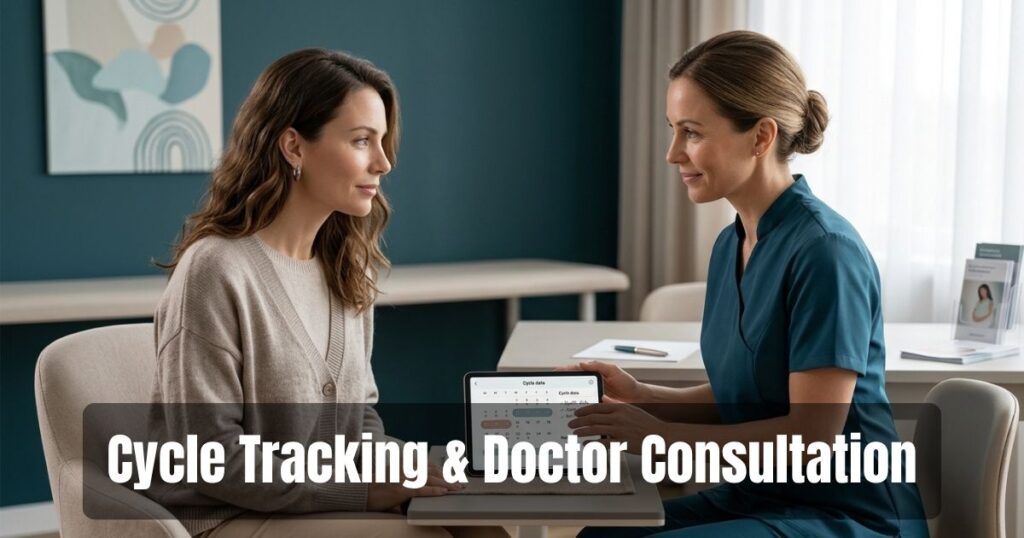
An occasional change in your period is not necessarily a reason to panic. However, persistent or significant changes deserve attention.
Consider seeking medical advice if:
Your previously regular cycles suddenly become irregular.
Your periods repeatedly occur less than 21 days apart or more than 35 days apart.
You repeatedly miss periods.
Your periods stop unexpectedly.
You have very heavy bleeding.
You bleed between periods or after sex.
You have severe or persistent pelvic pain.
You develop significant acne or increased facial/body hair along with irregular cycles.
You experience unexplained major weight changes.
You have symptoms that could suggest a thyroid problem.
You are trying to conceive and your cycles are consistently irregular.
If you could be pregnant and experience severe abdominal or pelvic pain, fainting, significant dizziness, or unusual bleeding, seek urgent medical attention.
What Happens When You See a Healthcare Professional?
The first step is usually understanding your menstrual history.
You may be asked:
How long are your cycles?
When did the irregularity begin?
How long has it been happening?
How long does bleeding last?
Is the bleeding unusually heavy?
Do you have spotting between periods?
Are your periods painful?
Do you notice acne or changes in hair growth?
Have you gained or lost weight?
How much do you exercise?
Are you under significant stress?
Are you taking medication or hormonal contraception?
Could you be pregnant?
Have you noticed signs of ovulation?
Depending on your symptoms, your healthcare professional may recommend blood tests or imaging.
The transcript describes evaluation that may include hormone testing such as FSH, estradiol, thyroid-related testing, prolactin, and sometimes AMH, along with ultrasound when appropriate.
Not everyone with irregular periods needs every test. The appropriate evaluation depends on your age, symptoms, medical history, reproductive goals, and examination findings.
Can You Make Your Period Regular Again?
There is no single treatment for irregular periods because the appropriate approach depends on the underlying cause.
However, you can support your overall health by:
Eat enough and eat well
Avoid extreme dieting or prolonged calorie restriction. A balanced diet with adequate energy and nutrients supports normal body functions, including reproductive health.
Exercise sustainably
Regular movement is beneficial, but excessive training without enough nutrition or recovery can interfere with menstrual function.
Manage ongoing stress
Prioritize sleep, relaxation, social support, and healthy ways of coping with stress.
Maintain a stable, healthy lifestyle
Sudden changes in weight, eating patterns, exercise, or sleep can affect your cycle.
Track your periods
Knowing your own cycle pattern makes it easier to recognize meaningful changes and gives your healthcare professional useful information.
Don’t self-diagnose
An irregular period can have many possible causes. Avoid assuming that every irregular cycle means PCOS, a “hormonal imbalance,” or another specific condition without appropriate evaluation.
Frequently Asked Questions
Is it normal to have an irregular period sometimes?
An occasional variation can happen, and not every change means there is a medical problem. However, repeated or significant changes from your usual pattern deserve attention.
How many days is a normal menstrual cycle?
For many adults, menstrual cycles generally occur every 21 to 35 days. Your individual pattern also matters, so consistently changing cycle lengths may be worth discussing with a healthcare professional.
Can stress make your period irregular?
Yes. Significant emotional or physical stress can interfere with the hormonal signals involved in ovulation and may lead to late, irregular, or missed periods.
Does an irregular period mean I have PCOS?
No. PCOS is one possible cause, but irregular periods can also be associated with stress, inadequate nutrition, excessive exercise, thyroid problems, prolactin changes, pregnancy, contraception, ovarian changes, and other conditions.
Can you get pregnant with irregular periods?
Yes. Irregular periods do not necessarily mean that pregnancy is impossible. However, irregular cycles can sometimes indicate irregular ovulation and can make it harder to predict the fertile window.
If you are trying to conceive and your periods are consistently irregular, consider discussing your cycles with a healthcare professional.
Can birth control cause irregular periods?
Yes. Depending on the type of contraception, you may experience spotting, lighter bleeding, changes in cycle timing, fewer periods, or no bleeding.
Should I worry if my cycle is suddenly shorter?
A single shorter cycle is not necessarily a cause for concern. However, if your cycles repeatedly become unusually short, particularly if they are consistently less than 21 days apart, it is worth discussing the pattern with a healthcare professional.
What tests may be done for irregular periods?
The tests depend on the suspected cause. Depending on your symptoms, a healthcare professional may consider pregnancy testing, thyroid testing, prolactin, reproductive hormones such as FSH and estradiol, and other investigations. Ultrasound may also be recommended in some situations.
Can irregular periods affect fertility?
Sometimes. Irregular periods may indicate that ovulation is not occurring regularly, which can make conception more difficult. However, the effect on fertility depends on the underlying cause.
Final Thoughts
An irregular period can be caused by something temporary, such as stress or a change in your lifestyle, but it can also be associated with conditions such as PCOS, thyroid disorders, hypothalamic dysfunction, prolactin abnormalities, changes in ovarian function, pregnancy, or other reproductive conditions.
The most important step is not to ignore a persistent change or assume that irregular periods are simply “normal for you.”
Start by tracking your cycle and paying attention to other symptoms. If your periods remain unpredictable, become unusually short or long, stop, or are accompanied by other concerning changes, speak with a qualified healthcare professional.
Your menstrual cycle can provide valuable information about your reproductive and overall health. Understanding your pattern is the first step toward understanding what your body may be telling you.
Medical Disclaimer
This article is for general educational purposes only and is not a substitute for professional medical advice, diagnosis, or treatment. Menstrual patterns vary from person to person, and the appropriate evaluation depends on individual circumstances. If you have persistent, severe, or unusual menstrual changes, consult a qualified healthcare professional.
Sources & References
American College of Obstetricians and Gynecologists (ACOG)
NHS — Irregular periods
MedlinePlus / National Institutes of Health
ACOG — Polycystic Ovary Syndrome (PCOS)