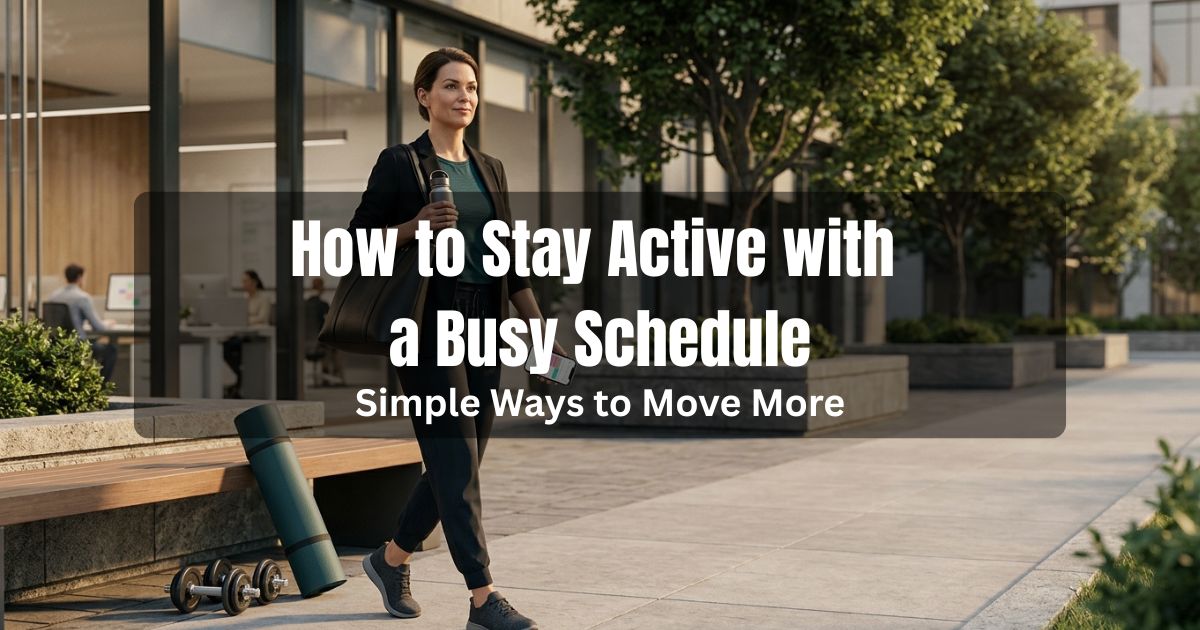
Between work, family responsibilities, household tasks, errands, and personal commitments, finding time for exercise can feel challenging. When your schedule is already full, physical activity may seem like one more task you need to squeeze into the day.
But staying active doesn’t necessarily mean spending an hour at the gym. A more realistic approach is to look for small opportunities to move throughout the day and build habits that fit your lifestyle.
The goal isn’t to do everything perfectly. It’s to make regular movement manageable enough that you can keep doing it.
Why Staying Active Matters
Regular physical activity supports overall health, fitness, mobility, and well-being. It can also help you maintain muscle strength and cardiovascular fitness while making everyday movement easier.
You don’t need to completely change your routine overnight. Small amounts of activity can be a practical starting point, particularly if you’re currently spending much of the day sitting.
1. Start Your Day with Movement
You don’t need a complicated morning workout to get moving.
Spend 5–10 minutes stretching, walking around your home, doing bodyweight exercises, or performing gentle mobility movements.
A short morning routine can help you establish movement as part of your day before other responsibilities take over.
If mornings are particularly busy, don’t worry. There are plenty of other opportunities later in the day.
2. Take Short Walking Breaks
If you spend several hours sitting, look for opportunities to get up and walk.
You could take a short walk during a break, walk around while making a phone call, or take a few minutes to move between tasks.
Instead of thinking that you need one long workout, consider how several short periods of movement could fit into your day.
3. Turn Your Commute into Activity
Your commute may offer opportunities to move more.
Depending on your circumstances, you could walk or cycle part of the journey, park farther from your destination, or get off public transportation a stop earlier and walk the remaining distance.
Only choose options that are safe and practical for you.
4. Use the Stairs When Practical
Choosing stairs instead of an elevator is a simple way to add more movement without scheduling another workout.
You can also look for other small opportunities throughout your day, such as walking to a nearby shop instead of driving when practical.
These individual choices may seem small, but they can help create a more active daily routine.
5. Break Up Long Periods of Sitting
If your work involves sitting at a desk, try not to remain in the same position for hours at a time.
Set a reminder to stand, walk, stretch gently, or change position periodically.
Simple movements such as shoulder rolls, calf raises, standing marches, and gentle stretches can be incorporated into short breaks.
The aim isn’t to turn every break into a workout. It’s simply to interrupt long periods of inactivity.
6. Make Household Tasks More Active
Everyday chores involve movement. Cleaning, gardening, organizing, washing the car, and carrying groceries can all keep you physically engaged.
Instead of viewing activity only as something that happens during a formal workout, recognize the movement already built into your day.
You can even put on some music while cleaning and make the task more enjoyable.
7. Schedule Exercise Like an Appointment
When your calendar is full, waiting for free time may not work.
Instead, choose a realistic time for movement and put it on your schedule.
It could be:
A 10-minute walk after lunch
A 15-minute home workout in the evening
A short stretching session before bed
A weekend walk with your family
The important thing is to choose something that fits your actual routine.
8. Don’t Try to Do Everything at Once
A busy lifestyle can become overwhelming when you try to improve everything simultaneously.
Instead of setting a goal such as “I need to exercise every day, eat perfectly, walk thousands of steps, and completely change my lifestyle,” choose one or two realistic actions first.
For example, start with a 10-minute walk after lunch.
Once that habit becomes easier, you can add another activity.
Small steps can be easier to maintain than a major lifestyle overhaul.
9. Prioritize What Matters Most
When your schedule feels overwhelming, take a moment to look at everything competing for your attention.
Ask yourself:
What actually needs to be done today?
What can wait?
Which activities support my health and personal goals?
Is there anything I can simplify, delegate, or remove?
This doesn’t mean ignoring important responsibilities. It means recognizing that you have limited time and energy.
When you prioritize realistically, it becomes easier to protect time for activities that matter to you—including movement.
10. Choose Activities You Enjoy
Exercise is easier to maintain when you actually like what you’re doing.
You might enjoy walking, dancing, cycling, swimming, playing a sport, stretching, strength training, or following short home workouts.
Don’t feel that you have to follow someone else’s routine. Find forms of movement that fit your interests, fitness level, and lifestyle.
11. Make Family Time Active
Exercise doesn’t always have to happen separately from family life.
Take a walk together, visit a park, play an outdoor game, go cycling, or simply spend some time being active together.
This can help you combine physical activity with quality time rather than treating the two as competing priorities.
12. Use Technology as a Reminder
A phone, smartwatch, or activity tracker can help remind you to move.
Set reminders to stand up, stretch, or take a short walk during the day.
Technology isn’t a replacement for motivation, but reminders can make it easier to turn good intentions into regular habits.
A Simple 15-Minute Busy-Day Workout
When you have very little time, try a simple routine such as:
2 minutes: March in place
2 minutes: Bodyweight squats
2 minutes: Wall push-ups
2 minutes: Standing knee raises
2 minutes: Reverse lunges or an easier alternative
2 minutes: Gentle mobility movements
3 minutes: Easy walking and cool-down
Adjust the exercises and intensity according to your fitness level. If you’re new to exercise, start gently and build gradually.
How to Stay Consistent
The hardest part of becoming more active is often getting started.
Rather than aiming for perfection, focus on creating a routine that feels doable.
Try these strategies:
Start with small goals.
Keep exercise equipment where you can easily see it.
Plan your workouts in advance.
Choose activities you enjoy.
Track your progress if it motivates you.
Don’t abandon your routine because you miss one day.
Gradually build on habits that are already working.
Remember that one missed workout doesn’t erase your progress. Simply return to your routine when you can.
Final Thoughts
Staying active with a busy schedule is less about finding a large amount of free time and more about making movement part of the time you already have.
Take short walking breaks, use the stairs when practical, move during household tasks, schedule short workouts, and find activities you genuinely enjoy. Most importantly, don’t overwhelm yourself by trying to change everything at once.
Start with one small, realistic habit and build from there. Over time, those small actions can become part of a more active lifestyle that works with your schedule rather than against it.
If you have an injury, medical condition, or are unsure which type of exercise is appropriate for you, consider speaking with a qualified healthcare or fitness professional before starting a new exercise routine.
Sources & References
- World Health Organization (WHO). Physical Activity. WHO recommends that adults get 150–300 minutes of moderate-intensity aerobic activity per week, or 75–150 minutes of vigorous activity, along with muscle-strengthening activities on 2 or more days per week. (World Health Organization)
WHO — Physical Activity - World Health Organization (WHO). WHO Guidelines on Physical Activity and Sedentary Behaviour. The guidelines emphasize that any amount of physical activity is better than none and that physical activity can include movement during transportation, work, leisure, and household activities. (World Health Organization)
WHO — Guidelines on Physical Activity and Sedentary Behaviour - U.S. Department of Health and Human Services (HHS), Office of Disease Prevention and Health Promotion. Physical Activity Guidelines for Americans, 2nd Edition. This evidence-based guideline explains the health benefits of physical activity and provides recommendations for adults and different age groups. (Health Promotion Office)
Physical Activity Guidelines for Americans - American College of Sports Medicine (ACSM). Physical Activity Guidelines. ACSM summarizes recommendations for aerobic activity and muscle-strengthening exercises and provides professional guidance on physical activity. (ACSM)
ACSM — Physical Activity Guidelines