You don’t need a gym membership, expensive equipment, or hours of free time to stay active. With just your body weight and a little space, you can build a simple workout routine right at home.
Bodyweight exercises can help improve strength, balance, coordination, mobility, and cardiovascular fitness. They can also be adjusted to suit different fitness levels, making them a practical option for beginners and more experienced exercisers alike.
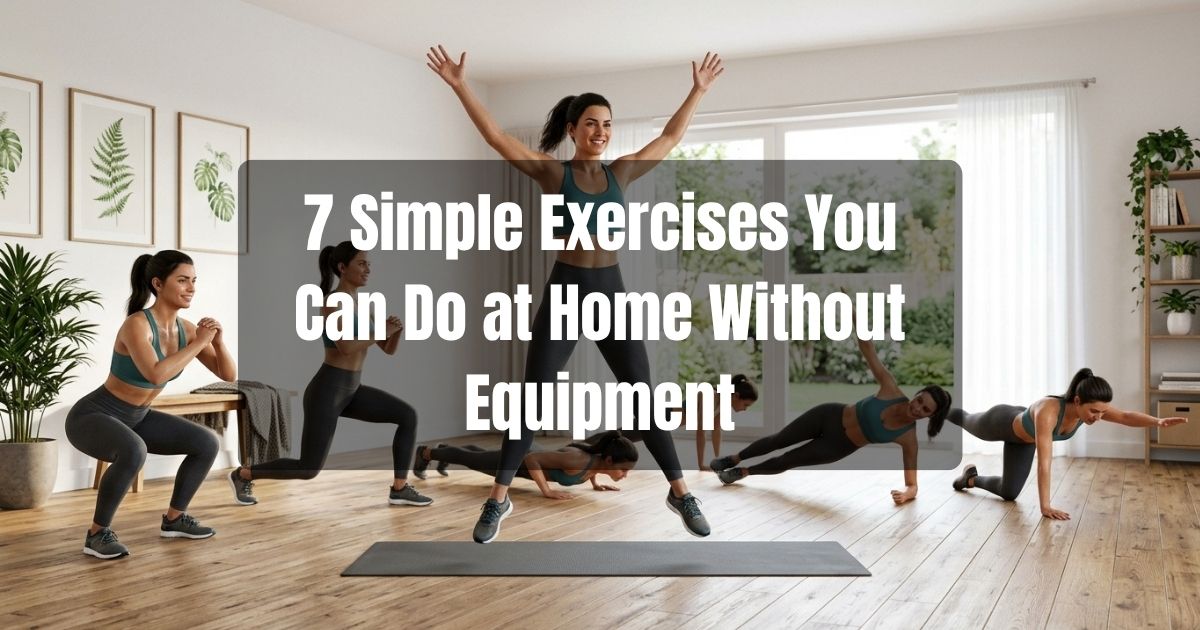
If you’re looking for an easy way to get moving, here are 7 simple exercises you can do at home without equipment.
1. Squats
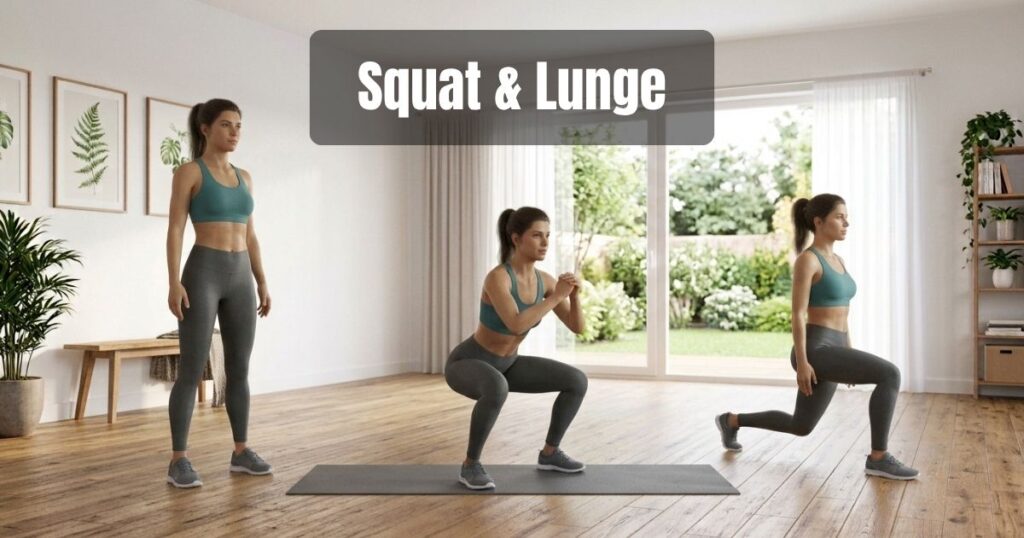
Squats are one of the most effective bodyweight exercises for your lower body. They primarily work your quadriceps, hamstrings, and glutes while also requiring your core to stabilize your body.
How to do squats:
- Stand with your feet about shoulder-width apart.
- Keep your chest lifted and your back in a comfortable, neutral position.
- Push your hips back and bend your knees as if you’re sitting in a chair.
- Lower yourself as far as comfortable while keeping your heels on the floor.
- Push through your feet to return to standing.
Start with 10–15 repetitions.
If regular squats become easy, you can gradually increase the repetitions or try more challenging variations such as jump squats. Beginners can perform shallower squats until they become comfortable with the movement.
2. Push-Ups
Push-ups are a classic bodyweight exercise that targets the chest, shoulders, triceps, and core. They can be modified easily, so beginners don’t have to start with a full push-up.
How to do a push-up:
- Begin in a plank position with your hands slightly wider than your shoulders.
- Keep your body in a straight line from your head to your heels.
- Bend your elbows and slowly lower your chest toward the floor.
- Push through your hands to return to the starting position.
- Keep your core engaged throughout the movement.
Try 5–10 repetitions to begin.
If a standard push-up is difficult, start with wall push-ups or incline push-ups using a stable elevated surface. You can gradually progress toward a traditional push-up as your strength improves.
3. Glute Bridges
Glute bridges are a simple floor exercise that focuses on the glutes and muscles around the hips while also engaging your core.
How to do a glute bridge:
- Lie on your back with your knees bent.
- Keep your feet flat on the floor and about hip-width apart.
- Place your arms beside your body.
- Tighten your core and squeeze your glutes.
- Lift your hips toward the ceiling in a controlled movement.
- Pause briefly at the top before slowly lowering your hips.
Aim for 10–15 repetitions.
Avoid arching your lower back excessively. Focus on using your glutes to lift your hips rather than simply pushing your stomach upward.
4. Lunges
Lunges work the quadriceps, hamstrings, and glutes while also challenging your balance and coordination. Because each leg works separately, they can help you develop stability and strength on both sides of your body.
How to do a basic lunge:
- Stand tall with your feet about hip-width apart.
- Step one foot forward.
- Bend both knees and lower your body under control.
- Keep your front knee comfortably aligned with your foot.
- Push through your front foot to return to the starting position.
- Repeat on the other side.
Start with 8–10 repetitions per leg.
If you’re new to lunges or have difficulty balancing, try holding onto a sturdy surface or performing stationary split squats. As your strength improves, you can experiment with more challenging variations.
5. Jumping Jacks
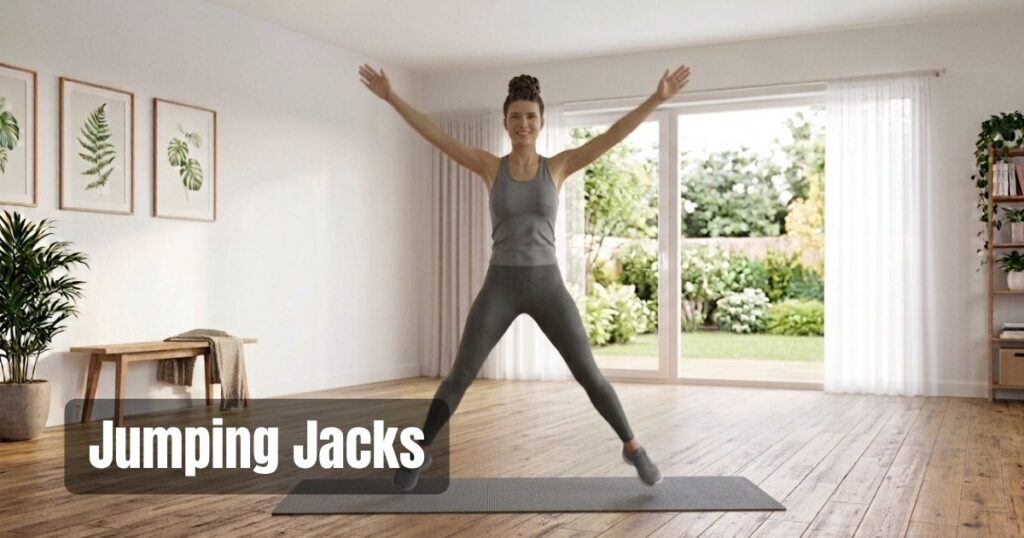
Jumping jacks are an easy way to add cardiovascular movement and coordination work to a home workout. They can be used as part of a warm-up or included in your main workout.
How to do jumping jacks:
- Stand with your feet together and arms at your sides.
- Jump your feet outward while raising your arms overhead.
- Jump back to the starting position.
- Continue at a comfortable, controlled pace.
Start with 20–30 seconds.
If jumping feels uncomfortable or you prefer a lower-impact option, try step jacks. Step one foot to the side at a time while moving your arms overhead.
6. Side Plank Raises
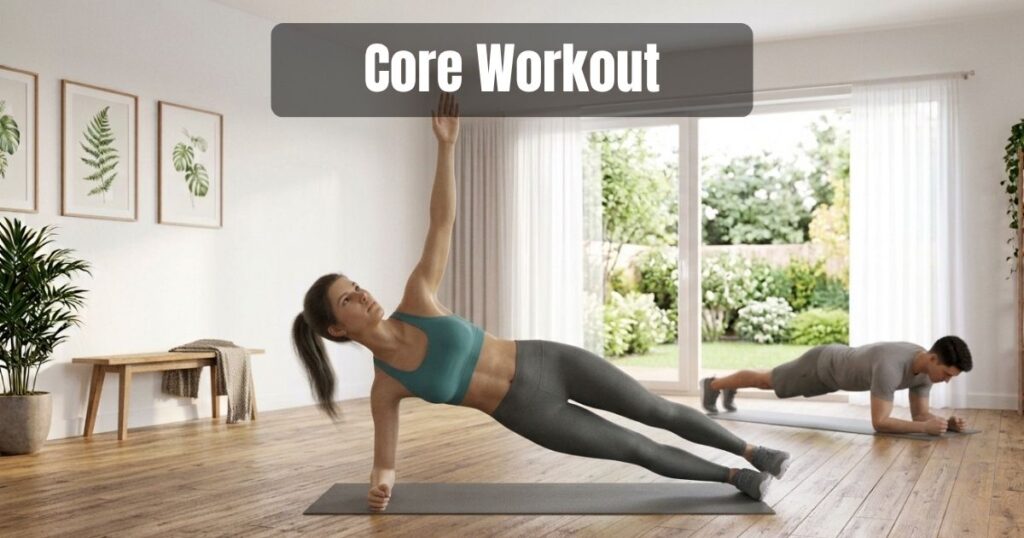
Side plank raises are useful for strengthening your core and oblique muscles while also challenging your stability. They can be modified for different fitness levels.
How to do side plank raises:
- Lie on your side and support your upper body with your forearm.
- Keep your legs stacked or adjust your position for comfort.
- Engage your core and lift your hips from the floor.
- Slowly lower your hips without completely relaxing.
Repeat for several repetitions before switching sides.
Beginners can perform the movement with their knees on the floor for additional support. As you become stronger, progress to the full side plank position.
Focus on controlled movement rather than trying to complete as many repetitions as possible.
7. Bird Dogs
Bird dogs are a controlled bodyweight exercise that works your core while improving balance and coordination. They’re particularly useful if you want to include a lower-impact movement in your workout.
How to do a bird dog:
- Start on your hands and knees.
- Position your hands under your shoulders and knees under your hips.
- Slowly extend one arm forward while extending the opposite leg backward.
- Keep your hips and shoulders as level as possible.
- Hold briefly before returning to the starting position.
- Repeat on the opposite side.
Try 8–10 repetitions per side.
Move slowly and avoid twisting your body. Maintaining control is more important than reaching as far as possible.
A Simple Home Workout Routine
You don’t need to spend an hour exercising to get started. Try this beginner-friendly routine:
| Exercise | Repetitions/Time |
| Squats | 10–15 reps |
| Push-ups | 5–10 reps |
| Glute bridges | 10–15 reps |
| Lunges | 8–10 per leg |
| Jumping jacks | 20–30 seconds |
| Side plank raises | 6–8 per side |
| Bird dogs | 8–10 per side |
Rest for 30–60 seconds between exercises when needed. Start with one round and gradually work up to two or more rounds as your fitness improves.
You can make the workout more challenging over time by increasing repetitions, adding another round, or progressing to a harder variation.
Tips for Exercising Safely at Home
Before starting, spend a few minutes warming up with light movement such as walking, gentle leg movements, or arm circles.
During your workout:
- Focus on proper form rather than speed.
- Start with easier variations if necessary.
- Keep your movements controlled.
- Take breaks when you need them.
- Exercise on a clear, non-slip surface.
- Stop if you experience sharp or unusual pain.
You don’t need to push yourself to exhaustion every time you exercise. Gradually increasing the challenge and staying consistent can be a more sustainable approach.
If you have an injury, medical condition, or concerns about starting a new exercise routine, speak with a qualified healthcare professional for personalized guidance.
Final Thoughts
Getting active at home doesn’t have to be complicated. Squats, push-ups, glute bridges, lunges, jumping jacks, side plank raises, and bird dogs can form the foundation of a simple full-body workout without requiring gym equipment.
Start at a level that feels manageable, learn the correct movement patterns, and gradually increase the challenge as your fitness improves.
Most importantly, don’t wait for the perfect time or the perfect workout. Start small, stay consistent, and let your progress build over time.