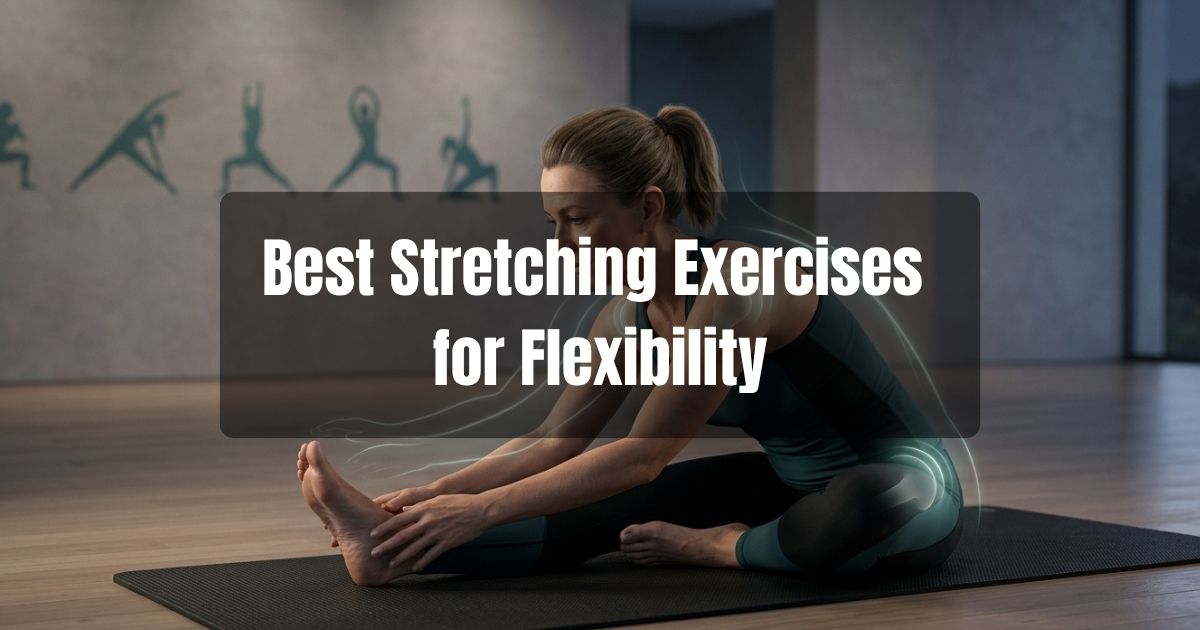
Flexibility is an important part of overall fitness, but it is often overlooked. While strength and cardio exercise receive plenty of attention, being able to move your joints comfortably through their available range of motion is also important for everyday movement.
If your body feels stiff after sitting for hours, or you find certain movements difficult, a regular stretching routine may help. You do not need expensive equipment or advanced flexibility to get started. A few minutes of controlled stretching, performed consistently, can gradually improve your range of motion.
Research supports this approach. A recent systematic review and meta-analysis of 189 studies found that static stretching can improve flexibility in adults, with larger improvements generally seen in people who started with poorer flexibility. (PubMed)
Why Is Flexibility Important?
Flexibility describes how freely a joint and its surrounding tissues can move. Good flexibility can make movements such as bending, reaching, walking, squatting, and exercising feel more comfortable.
Regular stretching may help:
- Improve joint range of motion
- Reduce feelings of muscle tightness
- Support comfortable movement
- Maintain mobility
- Complement strength and cardiovascular exercise
Flexibility is not something you need to achieve overnight. Your range of motion can improve gradually with consistent practice.
10 Best Stretching Exercises for Flexibility
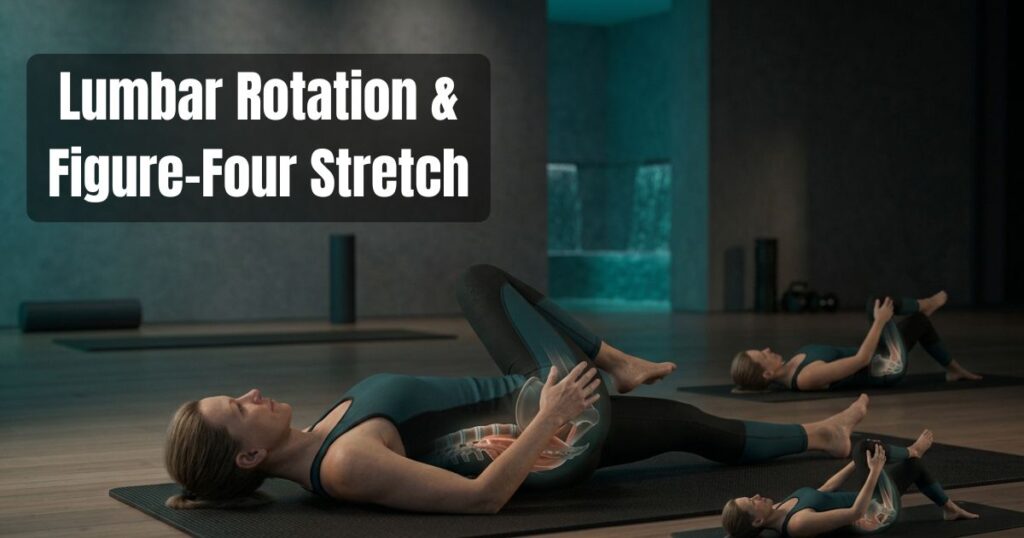
1. Lumbar Rotation Stretch
Lie on your back with your knees bent. Bring one knee across your body toward the opposite side while keeping your shoulders comfortably on the floor.
You should feel a gentle stretch through the lower back and hip. Hold for about 20–30 seconds, then repeat on the other side.
Move slowly and avoid forcing the knee toward the floor.
2. Supine Hamstring Stretch
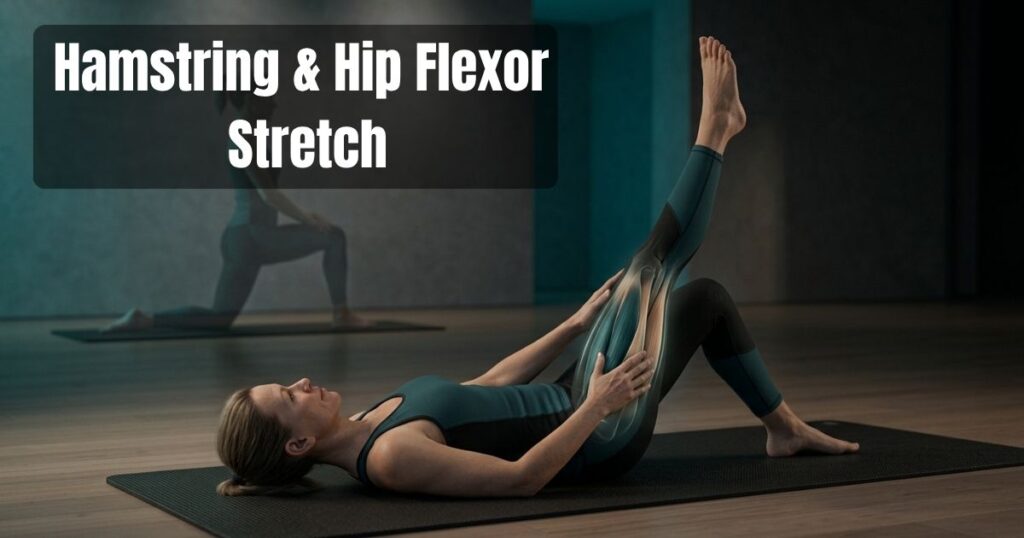
Lie on your back and bring one leg upward. Hold behind the thigh or knee and gently straighten the leg until you feel a comfortable stretch along the back of your thigh.
Hold for approximately 20–30 seconds before switching sides.
You do not need to completely straighten your knee or pull your leg as far as possible. The goal is gentle tension, not pain.
3. Figure-Four Piriformis Stretch
Lie on your back with both knees bent. Place one ankle over the opposite thigh, creating a figure-four shape.
Gently draw the supporting leg toward your chest until you feel a stretch around the outer hip and buttock.
Hold for 20–30 seconds and switch sides.
4. Kneeling Hip Flexor Stretch
Start in a half-kneeling position with one knee on the floor and the opposite foot in front.
Keep your torso upright and gently shift your hips forward while maintaining control. You should feel the stretch toward the front of the hip of the kneeling leg.
Hold for 20–30 seconds, then switch sides.
This can be particularly useful if you spend long periods sitting.
5. Kneeling Hamstring Stretch
From the half-kneeling position, shift your hips backward and extend your front leg.
Keep your back relatively straight and gently lean forward from your hips until you feel a stretch along the back of your thigh.
Hold for about 20–30 seconds on each side.
6. Seated Upper-Back Rotation
Sit comfortably with your legs positioned so that you can rotate your torso without strain.
Place one elbow outside the opposite knee and gently rotate your upper body toward that side. Keep the movement controlled rather than trying to twist as far as possible.
Hold for around 20–30 seconds before changing sides.
7. Child’s Pose
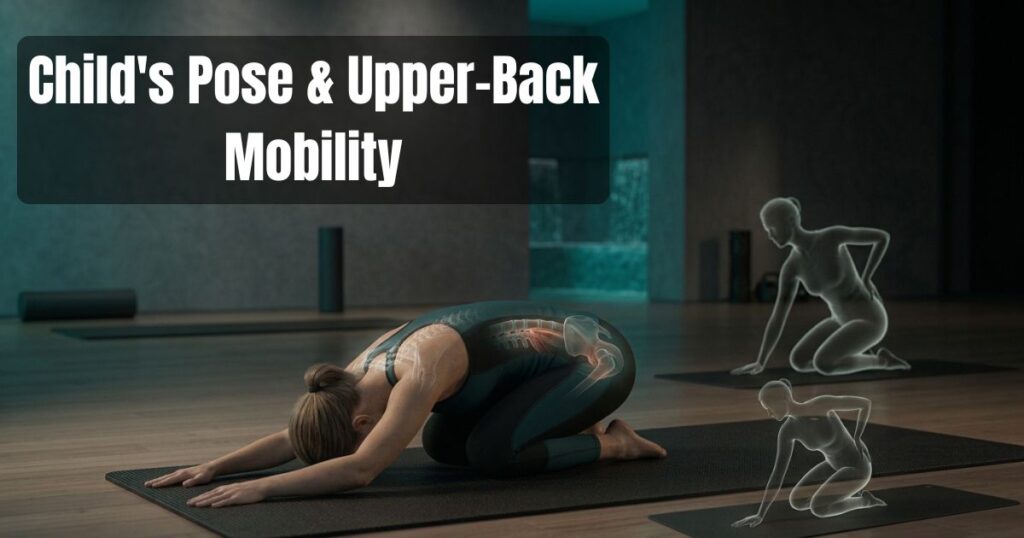
Start on your hands and knees. Slowly move your hips back toward your heels while extending your arms forward.
Allow your chest to move toward the floor as far as comfortable. You can place a cushion under your hips or chest if additional support is needed.
Hold for 20–60 seconds while breathing slowly.
Child’s pose provides a gentle stretch through areas including the back and hips.
8. Upper-Back Extension
Sit or stand comfortably and place your fingertips behind your head.
Bring your elbows slightly toward one another and gently round forward. Then slowly open your chest, separate your elbows, and extend your upper back while looking slightly upward.
Repeat the movement about 3–5 times without forcing your spine into a deep position.
9. Neck and Upper-Trap Stretch
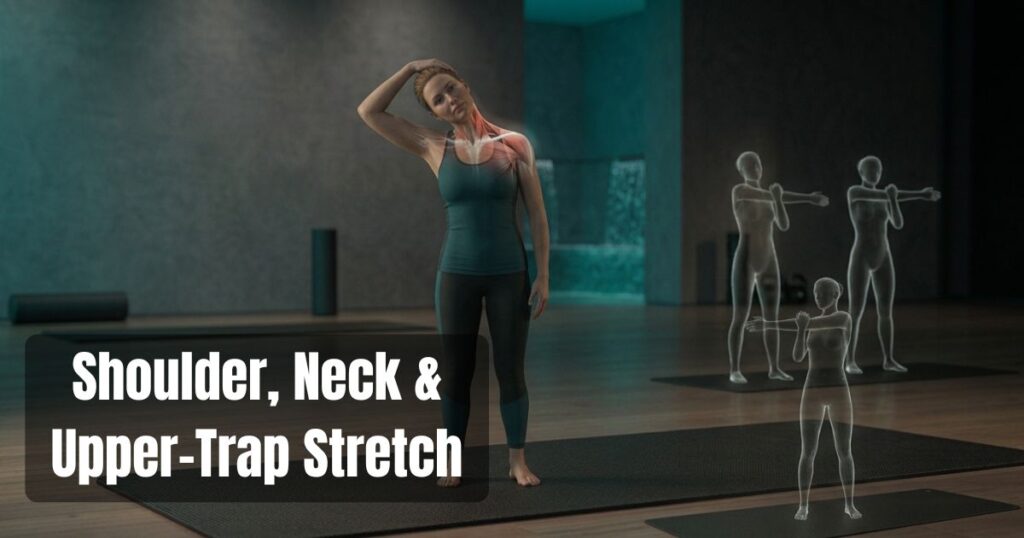
Sit or stand upright. Gently bring your left ear toward your left shoulder.
If comfortable, place your left hand lightly on the right side of your head and apply minimal pressure. You should feel a gentle stretch along the opposite side of your neck.
- Hold briefly and repeat on the other side.
- Never pull aggressively on your neck.
10. Butterfly Stretch
Sit on the floor and bring the soles of your feet together. Allow your knees to move naturally toward the sides.
Hold your feet or ankles and sit upright. If comfortable, gently lean forward from your hips.
Hold for 20–30 seconds without pushing your knees down.
A Simple 8-Minute Flexibility Routine
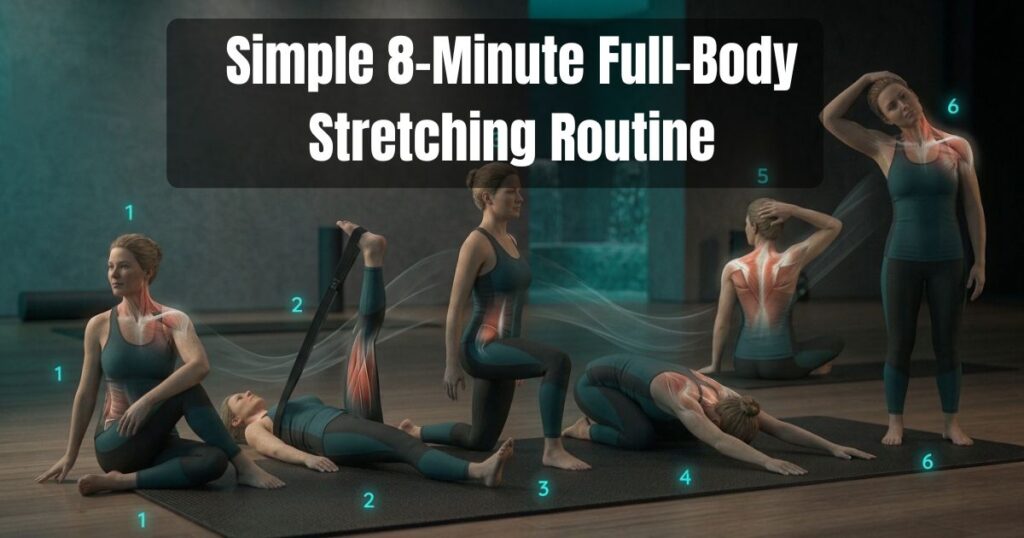
You can combine several of these exercises into a short routine when you have limited time.
Minute 1: Lumbar rotations
Minute 2: Supine hamstring stretch
Minute 3: Figure-four hip stretch
Minute 4: Hip flexor stretch
Minute 5: Kneeling hamstring stretch
Minute 6: Upper-back rotation
Minute 7: Child’s pose
Minute 8: Gentle neck and upper-trap stretches
Perform each movement on both sides where appropriate. Keep the intensity comfortable and focus on controlled breathing.
You do not have to follow this exact schedule. The most useful routine is one you can perform consistently.
Static vs. Dynamic Stretching
There are two common approaches to stretching.
Static stretching involves moving into a position and holding it, such as a hamstring or hip-flexor stretch. Evidence shows that regular static stretching can significantly improve range of motion over time. (PubMed)
Dynamic stretching involves controlled movement through a range of motion rather than holding one position. Examples include controlled leg swings, arm circles, and gentle mobility movements.
Dynamic movements can be useful as part of a warm-up before exercise, while static stretching can be incorporated into separate flexibility sessions or after activity. Research suggests that dynamic stretching can support range of motion and may be more appropriate than prolonged static stretching immediately before activities requiring strength or explosive performance. (PubMed)
How Often Should You Stretch?
Consistency matters more than trying to complete an extremely long session occasionally.
A short routine performed regularly can be a practical starting point. Research on static stretching shows that flexibility improvements can occur without very high stretching volumes. (PubMed)
You can begin with 5–10 minutes and gradually adjust your routine based on your goals, schedule, and comfort.
How to Stretch Safely
Keep these simple principles in mind:
Warm up before longer static stretches. A few minutes of light movement can prepare your body.
Stretch gently. You should feel tension or a mild pulling sensation, not sharp pain.
Don’t bounce. Use slow, controlled movements.
Keep breathing. Avoid holding your breath while stretching.
Don’t force your range of motion. Flexibility develops gradually.
Work both sides. Include both sides of the body unless a healthcare professional has advised otherwise.
Stop if something hurts. Persistent or sharp pain should not be ignored.
Stretching should not be treated as a guaranteed way to prevent injuries. Evidence does not show that stretching alone provides a meaningful reduction in overall exercise-related injury risk. (PubMed)
Common Stretching Mistakes
Trying to stretch as deeply as possible is not necessarily better. Pushing aggressively can make the exercise uncomfortable and may discourage consistency.
Other common mistakes include bouncing during static stretches, holding your breath, rushing through movements, stretching only one area of the body, and expecting dramatic results after just a few sessions.
Instead, focus on controlled movement, comfortable tension, and gradual progress.
Final Thoughts
The best stretching exercises for flexibility do not need to be complicated. Lumbar rotations, hamstring stretches, hip-flexor stretches, figure-four stretches, child’s pose, upper-back rotations, neck stretches, and butterfly stretches can all be incorporated into a simple routine.
You do not need to be flexible before you begin. Start with movements that feel comfortable, practice consistently, and gradually allow your range of motion to improve.
Flexibility is only one part of overall fitness, so combine stretching with strength training, cardiovascular activity, balance work, and adequate recovery for a well-rounded approach to movement.
If you have an existing injury, significant joint or muscle pain, or a medical condition affecting your movement, speak with a qualified healthcare professional or physical therapist before starting a new stretching routine.
References
Ingram L, et al. Optimising the Dose of Static Stretching to Improve Flexibility: A Systematic Review, Meta-analysis and Multivariate Meta-regression. Sports Medicine, 2025. (PubMed)
Konrad A, et al. Chronic effects of stretching on range of motion with consideration of potential moderating variables: A systematic review with meta-analysis. Journal of Sport and Health Science, 2024. (PubMed)
Opplert J, Babault N. Acute Effects of Muscle Stretching on Physical Performance, Range of Motion, and Injury Incidence in Healthy Active Individuals: A Systematic Review. Applied Physiology, Nutrition, and Metabolism, 2016. (PubMed)
Behm DG, et al. The Effects of Static Stretching Intensity on Range of Motion and Strength: A Systematic Review. Journal of Functional Morphology and Kinesiology, 2023. (PubMed)