The Five Main Food Groups
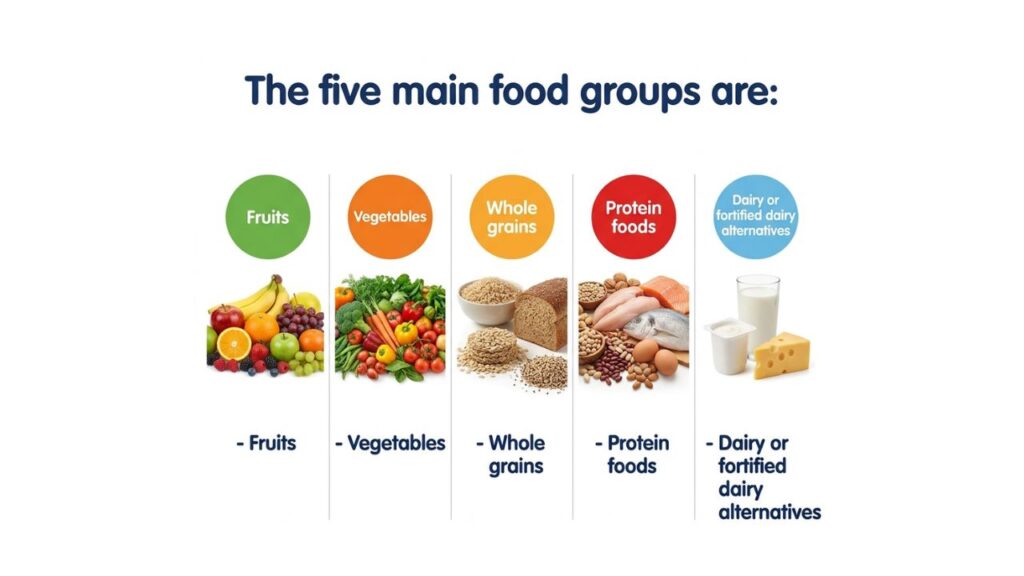
A balanced diet includes foods from all five food groups. Each group provides unique nutrients, so none should be completely eliminated unless recommended by a healthcare professional.
1. Fruits 🍎
Fruits are naturally rich in vitamins, minerals, antioxidants, and fiber.
Healthy choices include:
- Apples
- Bananas
- Oranges
- Berries
- Mangoes
- Papaya
- Grapes
- Pears
Tip: Choose whole fruits more often than fruit juice to get more fiber.
2. Vegetables 🥦
Vegetables are among the most nutrient-dense foods you can eat. They provide vitamins, minerals, fiber, and antioxidants while being naturally low in calories.
Include a variety of colorful vegetables, such as:
- Spinach
- Broccoli
- Carrots
- Tomatoes
- Bell peppers
- Cauliflower
- Cucumbers
- Cabbage
Tip: Fill half of your plate with vegetables at lunch and dinner.
3. Whole Grains 🌾
Whole grains provide complex carbohydrates, fiber, B vitamins, and minerals that help fuel your body and support digestive health.
Healthy options include:
- Brown rice
- Oats
- Whole-wheat bread
- Whole-wheat pasta
- Quinoa
- Barley
- Millet
Choose whole grains instead of refined grains whenever possible.
4. Protein Foods 🍗
Protein foods help build and repair muscles, support the immune system, and keep you feeling satisfied after meals.
Healthy choices include:
- Fish
- Chicken
- Turkey
- Eggs
- Lentils
- Chickpeas
- Beans
- Tofu
Try to include a source of protein with every main meal.
5. Dairy or Fortified Dairy Alternatives 🥛
These foods provide calcium, protein, and vitamin D to support healthy bones and teeth.
Healthy options include:
- Milk
- Yogurt
- Cheese
- Fortified soy milk
- Fortified almond milk
Choose lower-fat and unsweetened options when appropriate.
The Healthy Plate Method
One of the easiest ways to create balanced meals is by using the Healthy Plate Method. Instead of counting calories, focus on the proportions of different food groups on your plate.
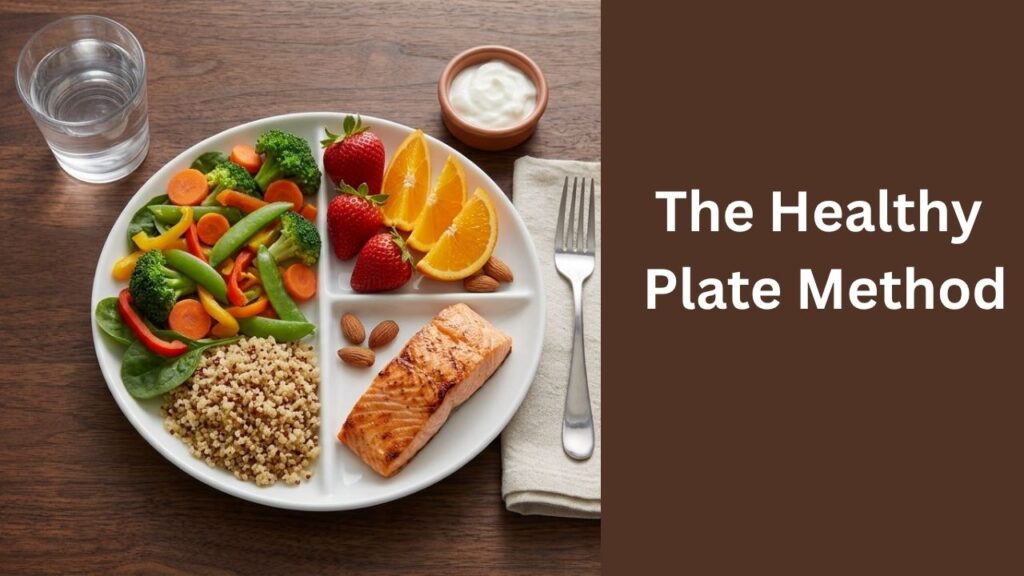
A balanced plate should include:
🥗 ½ Plate: Vegetables and fruits
🌾 ¼ Plate: Whole grains
🍗 ¼ Plate: Lean protein
🥑 Small Amount: Healthy fats such as olive oil, avocado, or nuts
💧 Drink: Water as your main beverage
This simple approach makes healthy eating easier while ensuring your body receives a variety of essential nutrients.
Portion Sizes, Foods to Eat, Foods to Limit & One-Day Meal Plan
Portion Size Guide
Eating nutritious foods is important, but portion size also plays a key role in maintaining a balanced diet and healthy weight. Eating more than your body needs—even healthy foods—can increase your calorie intake over time.
Use the following guide as a simple reference:
| Food Group | Recommended Portion |
| Vegetables | Fill ½ of your plate |
| Fruits | 1 medium fruit or 1 cup |
| Whole Grains | ½–1 cup cooked |
| Protein | Palm-sized serving (about 85–120 g) |
| Healthy Fats | 1–2 tablespoons or a small handful of nuts |
| Dairy | 1 cup of milk or yogurt |
Note: Portion needs vary depending on your age, sex, activity level, and health goals.
Foods to Include More Often
A balanced diet should focus on whole, minimally processed foods that provide essential nutrients. Aim to include these foods regularly in your meals:
Fruits
- Apples
- Bananas
- Berries
- Oranges
- Mangoes
- Papaya
Vegetables
- Spinach
- Broccoli
- Carrots
- Tomatoes
- Bell peppers
- Cucumbers
- Cauliflower
Whole Grains
- Brown rice
- Oats
- Whole-wheat bread
- Quinoa
- Whole-wheat pasta
- Barley
Lean Protein
- Chicken
- Fish
- Eggs
- Lentils
- Chickpeas
- Beans
- Tofu
Healthy Fats
- Olive oil
- Avocados
- Almonds
- Walnuts
- Chia seeds
- Flaxseeds
Dairy or Alternatives
- Milk
- Yogurt
- Cheese
- Fortified soy milk
- Fortified almond milk
Including a variety of these foods helps ensure your body receives all the nutrients it needs.
Foods to Limit
A balanced diet doesn’t mean giving up your favorite foods. Instead, enjoy them occasionally while making nutritious foods the foundation of your eating habits.
Try to limit:
- Sugary soft drinks
- Candy and sweets
- Cakes and pastries
- Fried foods
- Fast food
- Processed meats
- Chips and salty snacks
- Highly processed packaged foods
- Processed meats
- Chips and salty snacks
Limit Added Sugar
Health experts recommend keeping added sugars to less than 10% of your daily calorie intake.
Limit Sodium
Aim for less than 2,300 mg of sodium per day to help support healthy blood pressure and heart health.
Sample One-Day Balanced Diet Meal Plan
This sample meal plan includes foods from all major food groups and can be adapted to suit your personal preferences and nutritional needs.
Breakfast
- 1 bowl of oatmeal topped with sliced banana and almonds
- 1 boiled egg
- 1 glass of low-fat milk or fortified soy milk
Mid-Morning Snack
- 1 apple
- A small handful of unsalted almonds or walnuts
Lunch
- Grilled chicken breast or baked tofu
- 1 cup brown rice
- Steamed broccoli and carrots
- Mixed green salad with olive oil dressing
Afternoon Snack
- Plain Greek yogurt
- Fresh berries
Dinner
- Baked salmon or lentil curry
- Whole-wheat chapati or quinoa
- Mixed vegetables
Optional Evening Snack
- Herbal tea
- Fresh fruit (if hungry)
This meal plan provides a healthy balance of carbohydrates, protein, healthy fats, vitamins, minerals, and fiber to support energy and overall health.
Practical Tips for Maintaining a Balanced Diet
Healthy eating becomes easier when you build small, sustainable habits. Try these simple strategies:
- Fill half your plate with vegetables.
- Eat a variety of colorful fruits every week.
- Choose whole grains instead of refined grains.
- Include a source of protein with every meal.
- Add healthy fats such as nuts, seeds, olive oil, or avocado.
- Drink plenty of water throughout the day.
- Plan meals ahead to avoid unhealthy choices.
- Read nutrition labels when shopping.
- Cook more meals at home.
- Limit sugary drinks and processed foods.
- Enjoy treats in moderation instead of eliminating them completely.
Remember, consistency is more important than perfection. Small changes practiced regularly can lead to lasting improvements in your health.
Common Mistakes, Myths, FAQs, Conclusion & References
Common Mistakes to Avoid
Even when trying to eat healthy, many people make mistakes that reduce the quality of their diet. Avoiding these habits can help you maintain a healthier eating pattern.
1. Skipping Meals
Skipping meals may seem like a quick way to reduce calorie intake, but it often leads to excessive hunger later in the day and increases the risk of overeating.
Instead: Eat regular, balanced meals to keep your energy levels stable.
2. Eliminating Entire Food Groups
Unless advised by a healthcare professional, removing an entire food group can make it difficult to meet your nutritional needs.
Instead: Focus on balance and portion control rather than strict restrictions.
3. Eating Too Many Processed Foods
Highly processed foods are often high in added sugars, unhealthy fats, and sodium while providing fewer essential nutrients.
Instead: Choose whole, minimally processed foods whenever possible.
4. Ignoring Portion Sizes
Even healthy foods can contribute to excess calorie intake if eaten in large amounts.
Instead: Use the Healthy Plate Method and appropriate portion sizes.
5. Not Drinking Enough Water
Mild dehydration can affect energy, concentration, digestion, and physical performance.
Instead: Drink water regularly throughout the day and increase your intake during exercise or hot weather.
Common Myths About Balanced Diets
Myth 1: Carbohydrates Are Bad
Fact: Whole-grain carbohydrates are an important source of energy and provide fiber, vitamins, and minerals. The key is choosing whole grains instead of refined carbohydrates.
Myth 2: Healthy Eating Is Too Expensive
Fact: Nutritious foods such as oats, beans, lentils, eggs, seasonal fruits, frozen vegetables, and brown rice are often affordable and budget-friendly.
Myth 3: You Should Avoid Fat Completely
Fact: Healthy fats are essential for brain function, hormone production, heart health, and the absorption of fat-soluble vitamins. Focus on unsaturated fats while limiting trans fats.
Myth 4: Skipping Meals Helps You Lose Weight
Fact: Skipping meals can increase hunger and make overeating more likely. Long-term weight management is better supported by balanced meals and regular physical activity.
Myth 5: Healthy Food Is Bland
Fact: Herbs, spices, lemon juice, garlic, and healthy cooking methods can make nutritious meals flavorful and enjoyable.
Key Takeaways
- Eat foods from all five food groups every day.
- Include carbohydrates, protein, healthy fats, vitamins, minerals, and water in your diet.
- Fill half your plate with vegetables and fruits.
- Choose whole grains over refined grains.
- Practice portion control.
- Stay hydrated.
- Limit processed foods, added sugars, and excess sodium.
- Build healthy habits you can maintain long term.